Why a Custom Water System Is Not the Same as Buying One Off the Shelf
Category: Water 101 | Author: WaterGuard Co | Target Area: Athens, TN and East Tennessee
Walk into any hardware store and you will find shelves full of water filters. Pitchers, under-sink units, faucet attachments, countertop systems. The boxes all make similar promises about cleaner, better-tasting water. And for some people in some places, those products do something.
But there is a big gap between a product that does something and a system that solves your actual problem. That gap is what custom means.
This post breaks down what makes a water treatment system truly custom, how that is different from a generic or off-the-shelf approach, and why well water homeowners have a whole separate conversation to have before anyone starts recommending equipment.
What Generic Really Means
A generic water filter is designed to perform acceptably across the widest range of customers possible. The manufacturer cannot know where you live, what utility serves your neighborhood, or what is actually coming out of your tap. So they build for averages.
That means generic systems tend to address the most common and mild water problems. Chlorine taste and odor. Some sediment. Basic filtration that checks a box.
What they are not built for is your water. And your water is not average.
Depending on where you are in East Tennessee, your tap water may have elevated disinfection byproducts, PFAS compounds, hardness minerals, nitrates, or other contaminants that a standard filter will not fully address. You might also be paying for filtration aimed at problems you do not have, while the ones you do have slip right through.
Point of use vs. whole home matters here too. A point of use filter sits at one tap, usually the kitchen sink or refrigerator line. It helps with what you drink and cook with, but it does nothing for the water in your shower, your laundry, or the rest of your plumbing. A whole home system treats water at the point it enters your house, so every tap and appliance gets the same treated water. For families with young kids, people with sensitivities, or anyone who wants comprehensive protection, that distinction matters a lot.
What Custom Actually Means (And What It Does Not)
Custom does not mean expensive or complicated. It means the system is designed around what is actually in your water.
A reverse osmosis system is not custom. It is a type of technology. RO removes a broad range of contaminants at a point of use, typically under a kitchen sink, and it does that job well. But recommending RO without knowing your water first is still guesswork. You might need it. You might not. You might need something else entirely, or RO as one part of a larger solution.
A truly custom system starts with a test. WaterGuard comes to your home and tests your water on site, with real meters, in front of you. That data gets cross-referenced with your utility's Consumer Confidence Report and EPA records. From there, we design something around what we actually found.
That might mean an activated carbon system for chloramines and disinfection byproducts. It might mean a combination approach for a home dealing with both contaminants and hardness. The point is that the recommendation comes after we know your water, not before.
Whole home vs. point of use applies here too. A custom whole home system is designed to treat every drop of water entering your house, based on your specific contamination profile. A custom point of use system is designed to treat water at a specific location for a specific purpose, like drinking water at the kitchen sink. Neither is automatically better. The right answer depends on what your water actually shows and what you are trying to accomplish.
Well Water Is a Completely Different Conversation
If your home is on a well, everything above still applies, but the starting point is different.
City and county utilities are required to test and report their water quality. That data is public. It is the same data we use to build the water quality reports we send to homeowners in Athens, Etowah, Riceville, and other utility-served areas.
Well water has none of that. No utility. No Consumer Confidence Report. No government testing. Your well could be clean or it could have elevated bacteria, iron, manganese, arsenic, nitrates, sulfur, hardness, or any combination of those. You will not know until you test it yourself, and the testing needs to be more comprehensive than what a simple store-bought kit covers.
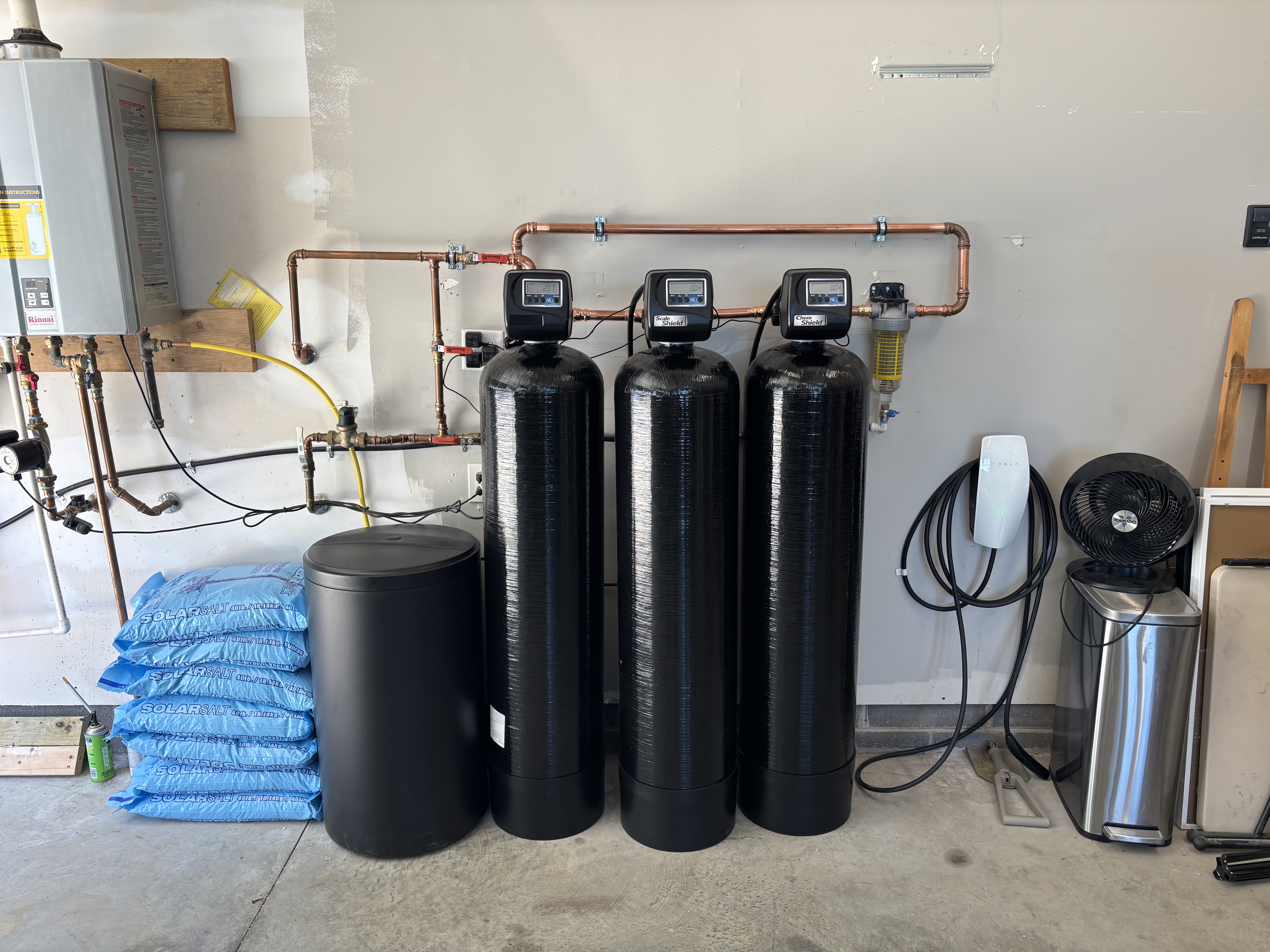
Well water treatment systems are also built differently. Because wells can have problems that municipal water does not, the equipment lineup often looks different. Whole home iron and sulfur filters. Bacteria treatment systems. Sediment pre-filters. Softeners for high-mineral well water. These are not off-the-shelf combinations. They are designed around what a thorough well water test comes back with.
If you are on well water in East Tennessee, the right first step is a real conversation about what you know about your well, how old it is, when it was last tested, and what you have noticed about your water. That conversation shapes what testing makes sense before any system discussion even starts.
How WaterGuard Approaches This
We do not sell systems over the phone, off a website, or based on a zip code alone. The first thing we do is talk.
When someone reaches out, we start with a conversation to understand your home, your water source, and what you are noticing or concerned about. From there, if it makes sense, we schedule an in-home water test and build a report around your actual results. Only then do we recommend a system, and that recommendation is specific to what we found.
For city water customers, that means your utility's data plus what we measure on site. For well water customers, it means a more in-depth testing process before anything else.
The goal is that you know exactly what is in your water before you spend a dollar on equipment. That is what custom means to us.
If you are in Athens, Etowah, Madisonville, Riceville, Charleston, Calhoun, or the surrounding areas and want to start that conversation, give us a call at (423) 205-1044 or schedule a time to talk at waterguardco.com.
WaterGuard is a local whole-home water filtration company based in Athens, TN, serving East Tennessee communities including McMinn County and the greater Knoxville to Chattanooga corridor.